
When capacity is lacking – why crises are the right time for digitalization

Why crises are the right time for digitalization

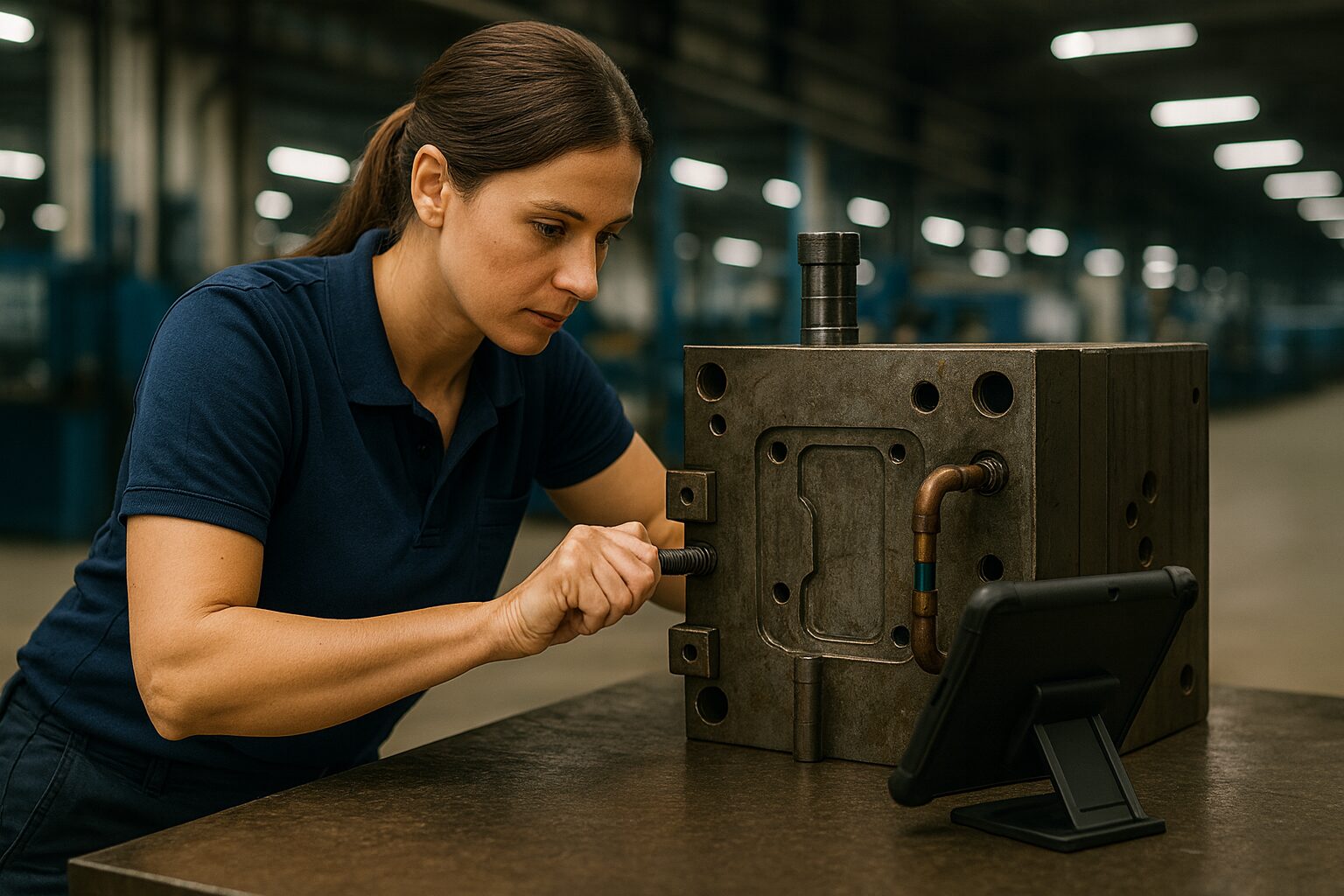
A medium-sized manufacturing company recognized early on that when a new, highly variable product for a Tier 1 customer in the automotive industry arrives, every detail in production will matter — especially tool management. Tools must be available, easy to locate, and optimally used and maintained so that no unplanned incidents occur, particularly given the typically small margins. For this reason, the company made a forward-looking investment in a Cosmino software solution for tool data acquisition.

But then the economic crisis hit. The product launch was postponed several times by the OEM. There was a risk that the investments made would not pay off. The expected variety of product variants did not materialize at first, and the customers’ call-offs were also lower than initially announced.

Suddenly, not only was there a lack of production capacity, but also no longer a need for the new tool management system. To save current costs, the rollout could no longer take place. Instead, the manual organization of tool components, tool assemblies, and tool service lives continued – even though the digital software tool was ready for use

Digitalization is not a luxury – it is a survival strategy

A one-off case? Not at all.

The problem often lies in timing: companies digitize when they “have the time and money” – or when the pain has already become significant. Yet it is precisely in quieter periods that there is room to analyze processes, collect data, run pilot phases, and involve employees.

Because when the market picks up again, it’s too late for foundational work. By then, digital tools should already be in place – and everyone should be confident in using them.

In the end, efficiency gains and flexibility were still necessary

By now, the highly variable item is produced daily for several hundred vehicles, and both quantities and variation continue to increase. Flexible tool management became essential for efficient production. This made things particularly hectic, as the paused software project still had to be completed and rolled out.

In the end, at least the client’s specialist department was certain that they could have benefited from the implemented functions much earlier.

On the one hand, it provided greater transparency—not just for individual tools, but for every assembled tool component.

On the other hand, employees are guided through processes, for example via guided tool assembly using tool bill of materials.
And the time savings should not be overlooked, as tool master data, components, bills of materials, and reports are no longer maintained across multiple tools and lists, but are all managed within the Cosmino MES.

Conclusion: Invest before the bottleneck becomes obvious

Digitalization is not a short-term efficiency booster. It is the prerequisite for companies to avoid collapsing under pressure—to react quickly, plan flexibly, and produce profitably in the long term. Every efficiency gain achieved becomes valuable not only when order books are full again, but especially during a crisis, when saving time and money or improving quality can be crucial for survival.

So: the best time to digitalize? Already gone.
The second best? Now.

COSMINO AG 19 Bewertungen auf ProvenExpert.com